
How to choose an automation partner in South Africa
Choosing an automation partner is a decision most South African business owners make once, with very little to compare it against. This guide sets out a practical process in three phases: preparation, partnership and performance.
Take the PDF if you would rather keep it.




The automation dilemma
Three things usually sit in the way at once. There is no time to work it all out, because establishing the business rules behind a process feels like a job on its own. There is the worry about falling behind, with competitors moving on efficiency and cost. And there is the risk to your data and your team, which is a fair concern rather than an excuse.
All three are reasonable. The guide below works through them in the order they arrive, from preparing your side, to choosing who you work with, to keeping the thing running once it is built.
What choosing an automation partner should look like
Preparation comes first. You understand and document how the work runs today. Then partnership, where you establish that the partner can be trusted and the engagement is structured properly. Then performance, where the solution is adopted, tested and maintained.
Skipping the first phase is the most common and most expensive mistake. A partner cannot quote accurately on a process nobody has described.
PHASE 1: PREPARATION
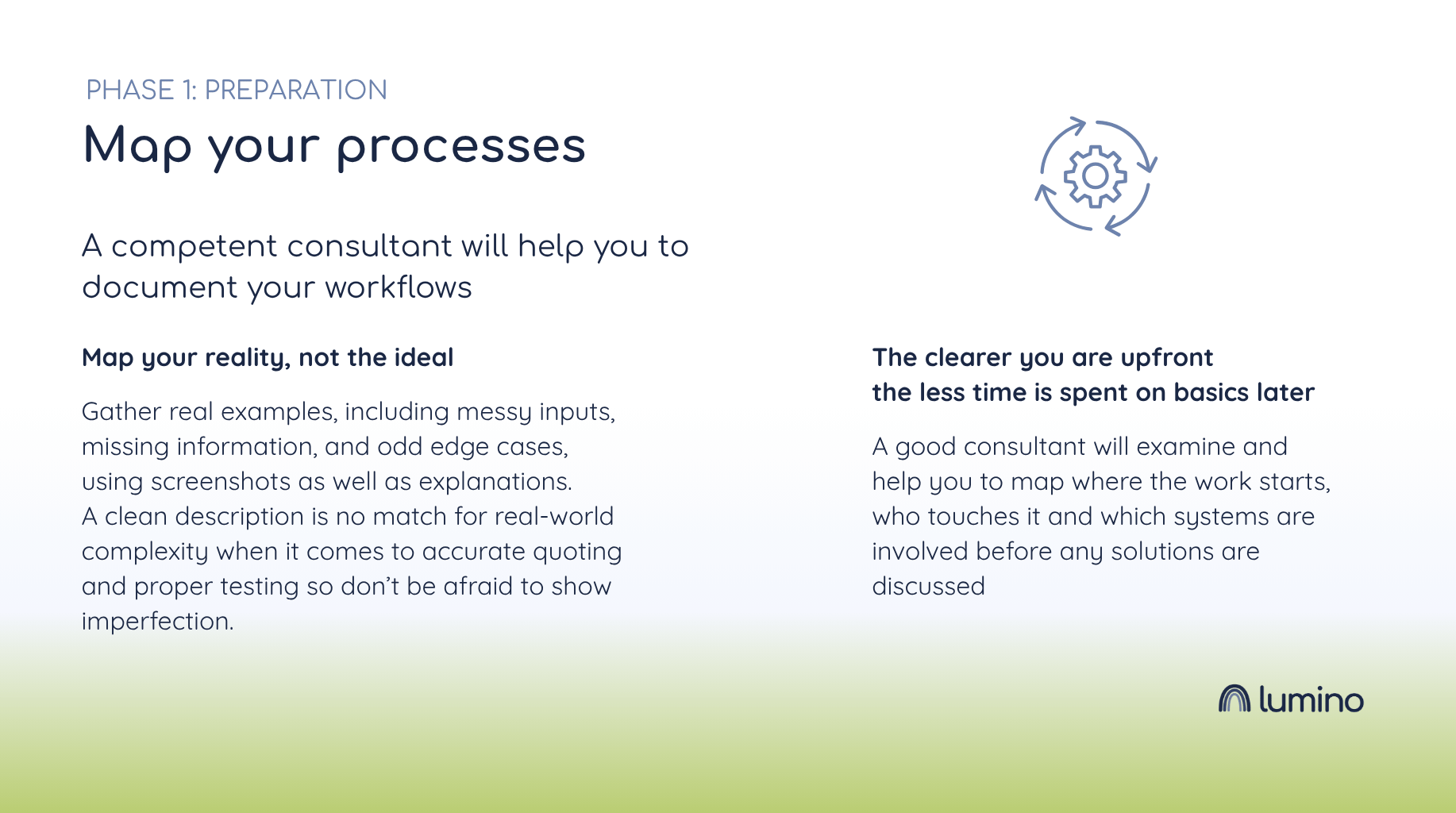
Map your processes
A competent consultant will help you document your workflows. Your part is to gather real examples, including messy inputs, missing information and the odd edge cases, using screenshots as well as explanations. A clean description is no match for real-world complexity when it comes to accurate quoting and proper testing, so show the imperfection.
A good consultant will then map where the work starts, who touches it, and which systems are involved, before any solution is discussed. The clearer you are upfront, the less time is spent on basics later.
PHASE 1: PREPARATION
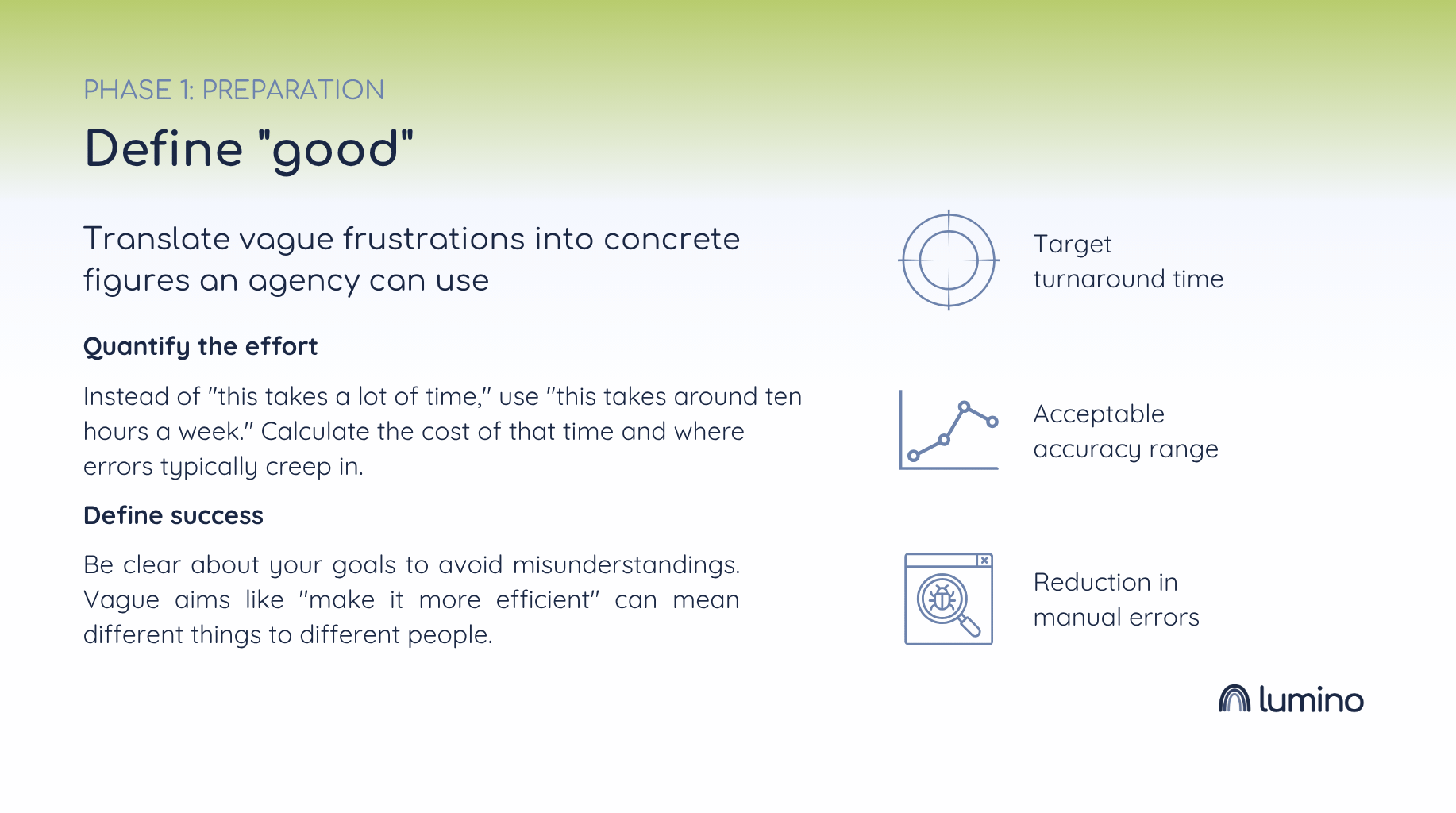
Define what good looks like
Translate vague frustrations into concrete figures a partner can work with. Instead of saying a task takes a lot of time, say it takes around ten hours a week. Work out what that time costs and where the errors typically creep in.
Then define success plainly, because an aim like making it more efficient means different things to different people. Target turnaround time, an acceptable accuracy range, and a reduction in manual errors are the kinds of measures worth agreeing before anyone builds anything.
PHASE 1: PREPARATION
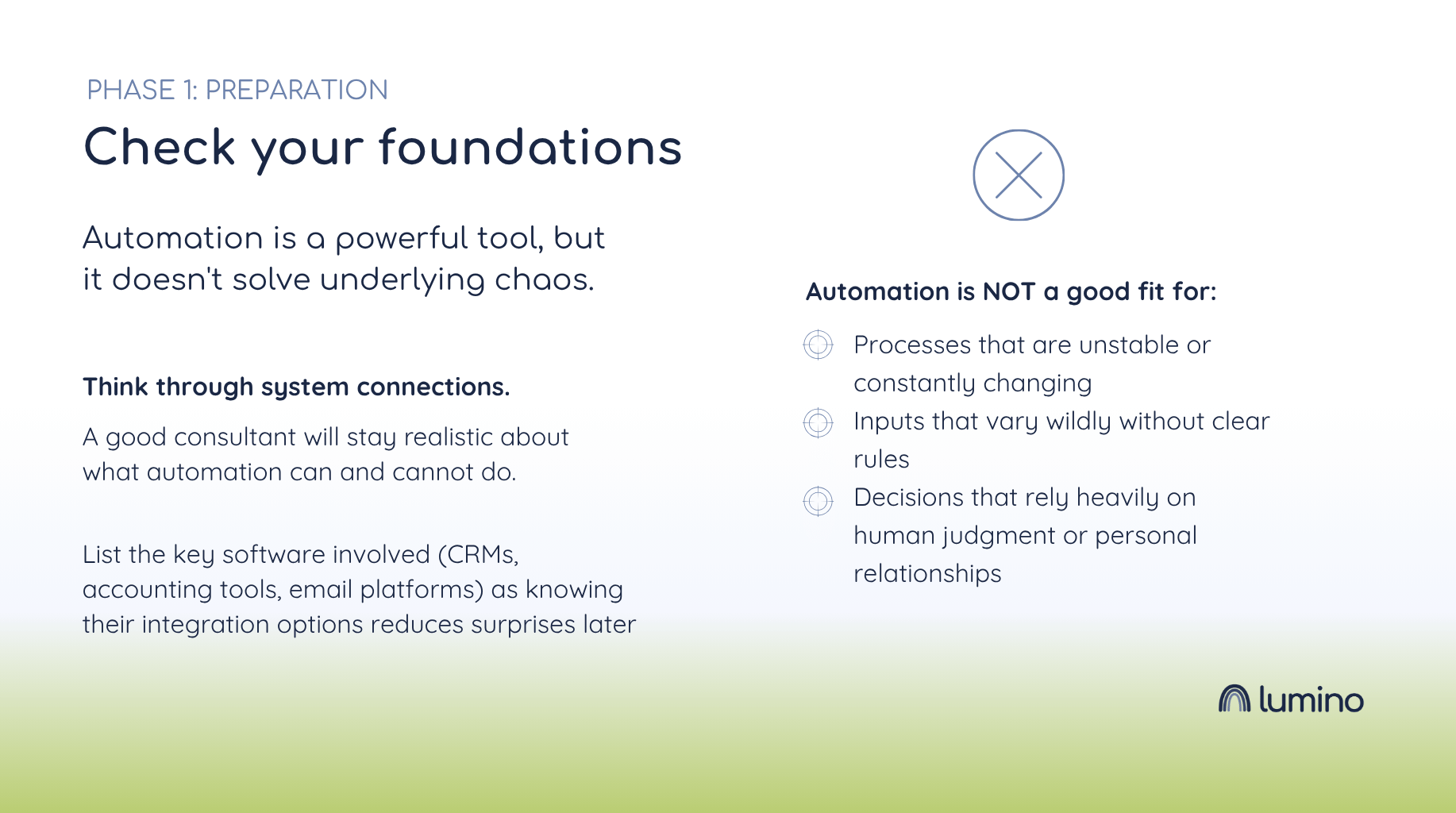
Check your foundations
Automation is a powerful tool and it does not solve underlying chaos. A good consultant stays realistic about what it can and cannot do, and will say so early.
List the key software involved, the CRM, the accounting tools, the email platforms, because knowing their integration options reduces surprises later. Automation is a poor fit for processes that are unstable or constantly changing, for inputs that vary wildly with no clear rules, and for decisions that rest on human judgement or personal relationships.
PHASE 2: PARTNERSHIP
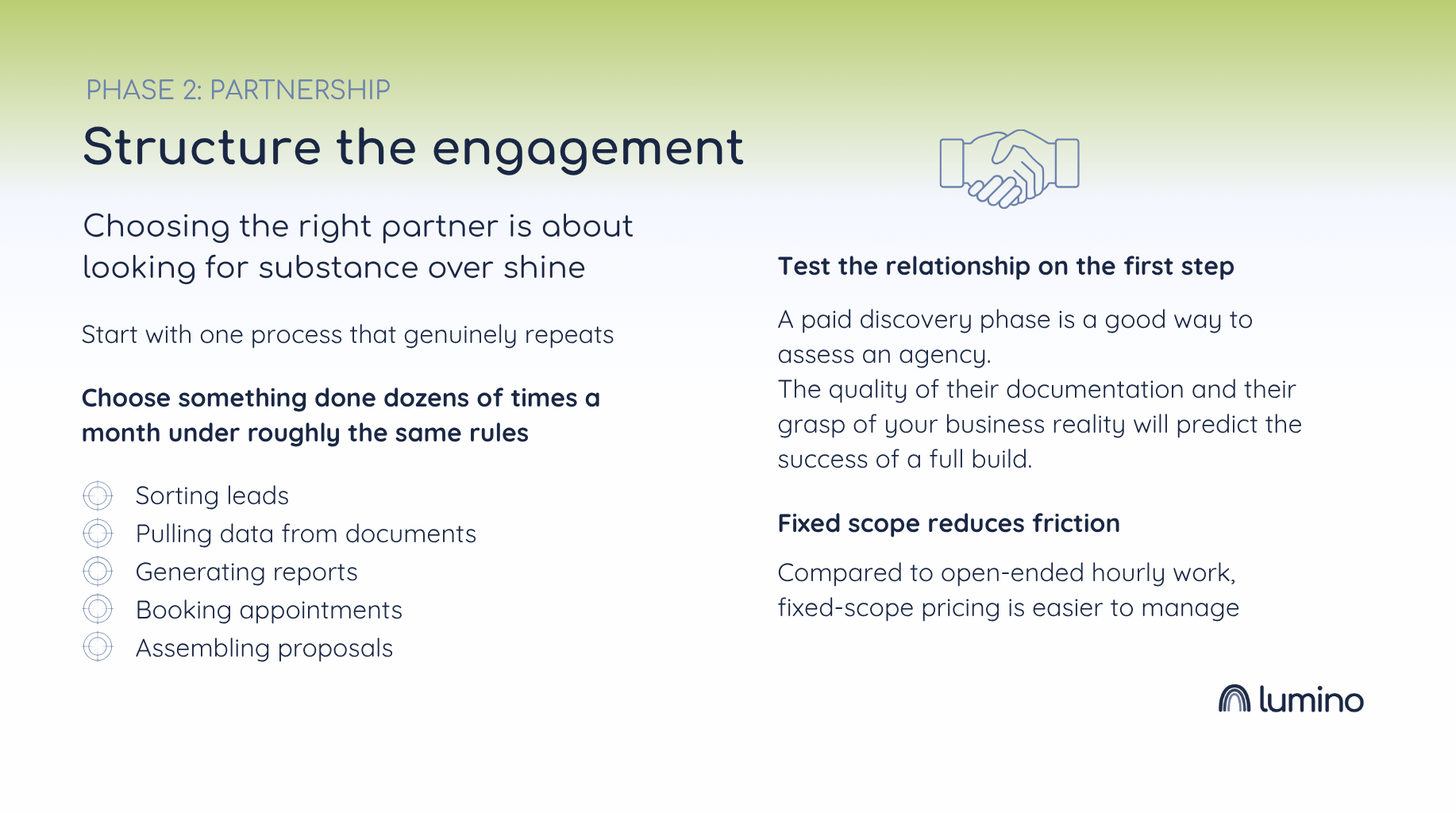
Structure the engagement
Look for substance over shine, and start with one process that genuinely repeats. Something done dozens of times a month under roughly the same rules: sorting leads, pulling data from documents, generating reports, booking appointments, assembling proposals.
Test the relationship on the first step. A paid discovery phase is a reliable way to assess a partner, because the quality of their documentation and their grasp of your business reality will predict how the full build goes. Fixed-scope pricing is easier to manage than open-ended hourly work.
PHASE 2: PARTNERSHIP
Own your solution
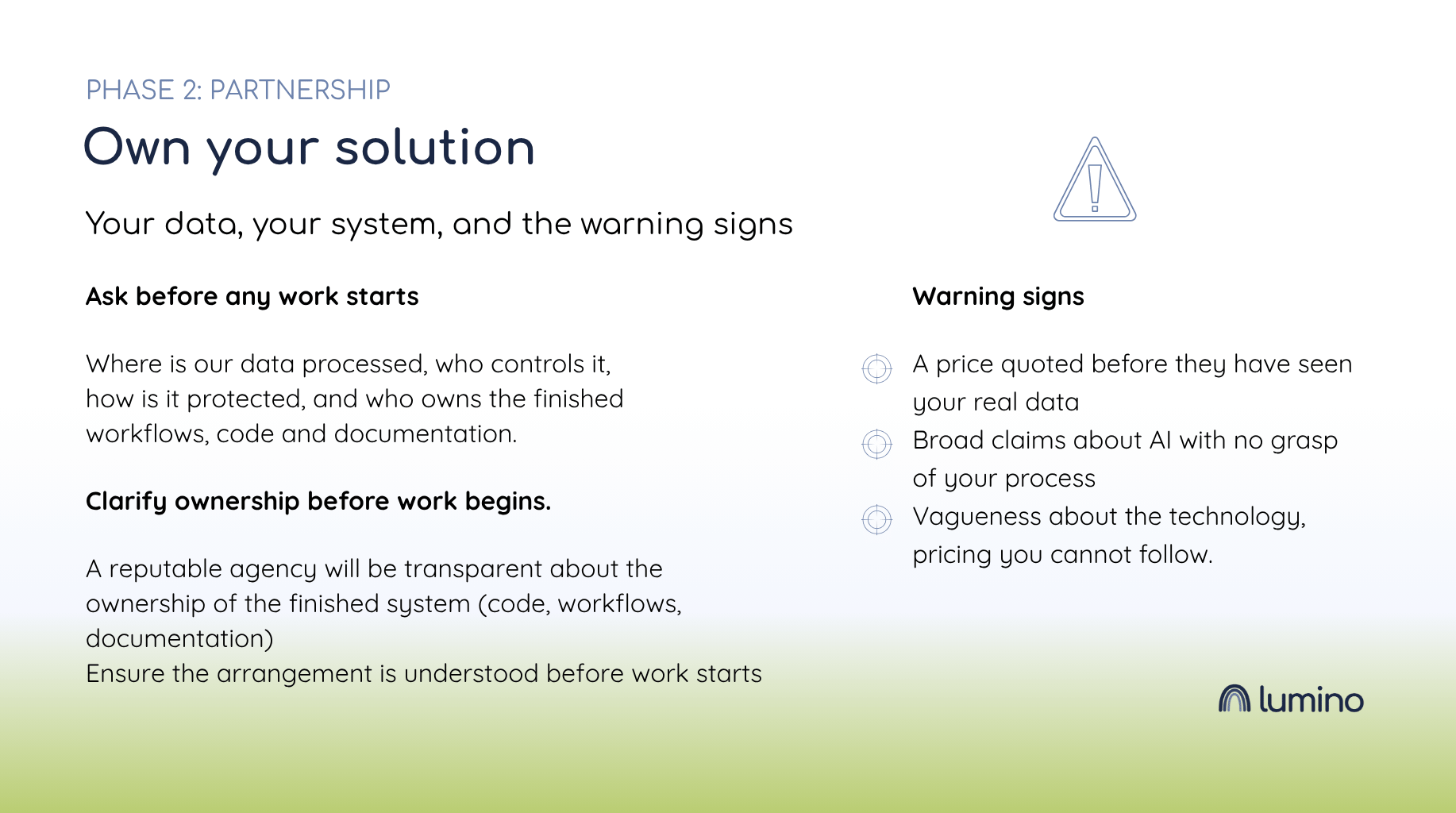
Ask before any work starts: where is our data processed, who controls it, how is it protected, and who owns the finished workflows, code and documentation. A reputable partner is transparent about all of it and will make sure the arrangement is understood before work begins.
Three warning signs. A price quoted before they have seen your real data. Broad claims about AI with no grasp of your process. Vagueness about the technology, and pricing you cannot follow.
PHASE 3: PERFORMANCE
Anticipate change management
Build for adoption. The people doing the work should help document, test and refine it, because when automation is imposed the resistance shows up quietly as workarounds. Adoption is significantly smoother when the team has been involved from the documenting stage onward.
Phase the changes in. Run the automation alongside the manual process for a period. Parallel testing builds confidence and surfaces the small issues before you rely on the system.
PHASE 3: PERFORMANCE
Handover and ongoing care
Training and documentation matter as much as the build. Your team should be comfortable monitoring the system, handling common issues, and knowing when to ask for help.
Then plan for maintenance. Automations need monitoring and adjustment as the systems around them change. Anyone telling you otherwise is oversimplifying in order to win the work.
What this costs and how long it takes
Both are scoped during a structured discovery rather than fixed in advance, because the answer depends entirely on the process. A supplier quoting a price before understanding how the work runs is quoting a guess, which is the first warning sign on the list above.
If you want a figure before you speak to anyone, our time cost calculator works out what a manual process costs you over a year. The operational dependency audit is the companion piece, and scores where your business depends on one person.